

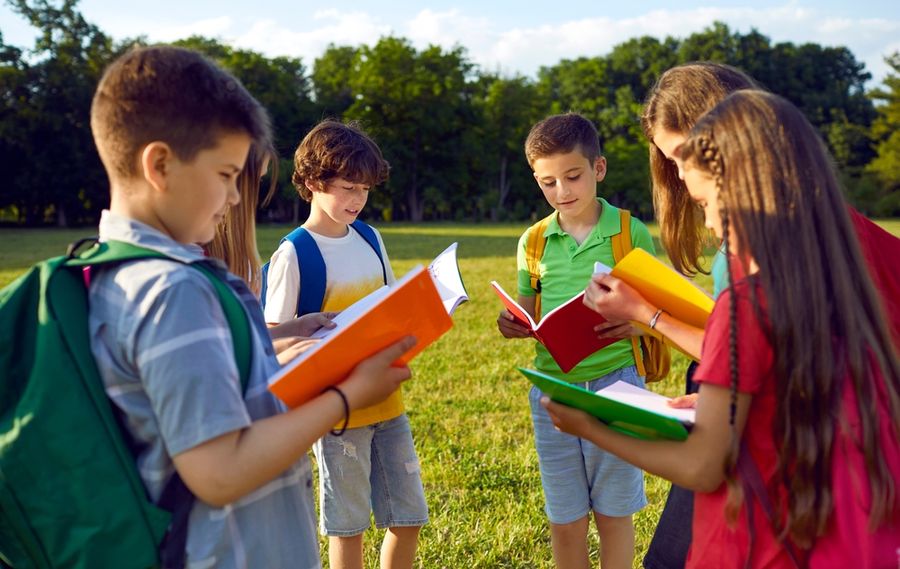
Imagine a preschool classroom where fallen logs become balancing equipment, puddles inspire scientific questions, and changing seasons shape daily lessons. Forest kindergarten takes early childhood education outdoors, using natural environments as places for exploration, play, and discovery. Although traditional preschools also encourage creativity and hands-on learning, forest programs organize much of their instruction around experiences in nature. Understanding the differences in teaching methods, daily routines, safety practices, and educational goals can help families decide which approach best suits their children.
Learning Takes Place Primarily Outdoors
The most recognizable difference between forest kindergarten and traditional preschool is the learning environment. Conventional preschools generally operate in buildings with designated areas for reading, art, construction, and imaginative play. Outdoor activities may occur daily, but indoor classrooms remain the primary setting for instruction.
Forest kindergarten reverses that arrangement. Children spend most or all of their learning time in natural environments such as woodlands, meadows, and parks. The forest kindergarten model emphasizes daily outdoor immersion, child-directed learning, and education connected to the surrounding environment. Some programs have access to indoor shelters, while others operate almost entirely outside, adjusting activities when weather conditions become unsafe.
Children Help Shape the Curriculum
Traditional preschools often organize instruction around planned themes, learning centers, and teacher-prepared activities. Children may explore a topic through stories, crafts, songs, and guided exercises. High-quality conventional programs also provide substantial opportunities for play and individual choice, so teacher direction is not necessarily their defining feature.
Forest kindergarten places particular emphasis on following children's emerging interests. A group discovering mushrooms near a fallen tree might spend several days investigating decomposition, examining forest habitats, and discussing how living organisms interact. This approach reflects the child-led, nature-based curriculum, in which educators respond to children's observations rather than following a rigid sequence of predetermined activities.
Natural Materials Replace Many Classroom Supplies
Traditional preschools commonly provide puzzles, building blocks, art supplies, picture books, and educational manipulatives. These materials are selected to support particular developmental skills and are generally available in predictable classroom locations.
Forest kindergarten relies more heavily on objects found outdoors. Sticks might become measuring tools, stones could support counting activities, and fallen leaves might inspire investigations involving color and shape. Children can construct temporary shelters, arrange natural materials, and invent imaginative games using their surroundings. The nature-based learning environment emphasizes flexible spaces and natural materials that respond to changing environmental conditions. Manufactured supplies may still be used, but they typically play a smaller role.
Physical Challenges Are Part of Everyday Learning
Forest kindergarten often provides frequent opportunities for walking across uneven ground, balancing on logs, climbing appropriate natural features, and navigating unfamiliar terrain. These activities encourage children to consider their movements, recognize obstacles, and develop confidence with physical challenges.
Unlike activities on standardized playground equipment, natural environments change with weather and seasonal conditions. A familiar pathway might become muddy or slippery after rainfall. Teachers must therefore distinguish manageable challenges from unacceptable hazards. The outdoor safety practices emphasize staff training, appropriate supervision, environmental assessments, and thoughtful management of physical risks. Forest education should not mean allowing children to encounter dangerous situations without preparation or support.
Academic Skills Develop Through Real-World Experiences
Parents sometimes wonder whether forest kindergarten provides enough preparation for elementary school. Children in these programs may spend less time completing worksheets or practicing academic exercises at classroom tables, but that does not mean literacy and mathematics are absent.
Instead, academic concepts can emerge through outdoor experiences. Children might compare the lengths of sticks, recognize patterns in leaves, follow spoken directions, or describe an animal they observed. Educators can introduce vocabulary, counting, early writing, and storytelling through these encounters. However, the specific academic preparation offered depends on the program. Families should ask how teachers assess progress in language, mathematics, and other developmental areas rather than assuming that all forest kindergartens follow identical practices.
Daily Routines Require Different Preparation
Attending forest kindergarten can involve more logistical preparation than attending an indoor preschool. Children may need waterproof outerwear, insulated layers, sturdy footwear, sun protection, and spare clothing. Families should understand how programs address toileting, drinking water, handwashing, meals, and access to shelter.
Weather policies are particularly important. Outdoor learning can continue during ordinary rain or cold conditions when children are properly equipped, but extreme heat, lightning, dangerous winds, and poor air quality require protective measures. The recommendations for outdoor early learning programs address these practical considerations. Parents should also ask about licensing, staff qualifications, child-to-teacher ratios, accessibility, and emergency procedures.
Choosing the Preschool Environment That Fits Your Child
Forest kindergarten and traditional preschool share an important purpose: supporting young children's learning and development. Their primary distinction lies in how educational experiences are organized. Forest programs immerse children in natural settings and often follow their discoveries, while conventional preschools typically provide a more structured indoor environment with dedicated learning materials.
Neither approach is automatically better for every child. Families should visit prospective programs, observe how teachers interact with children, and ask about curriculum, safety, and preparation for elementary school. The most suitable choice is one that combines thoughtful instruction, appropriate developmental expectations, and an environment where the child can learn comfortably and confidently.