

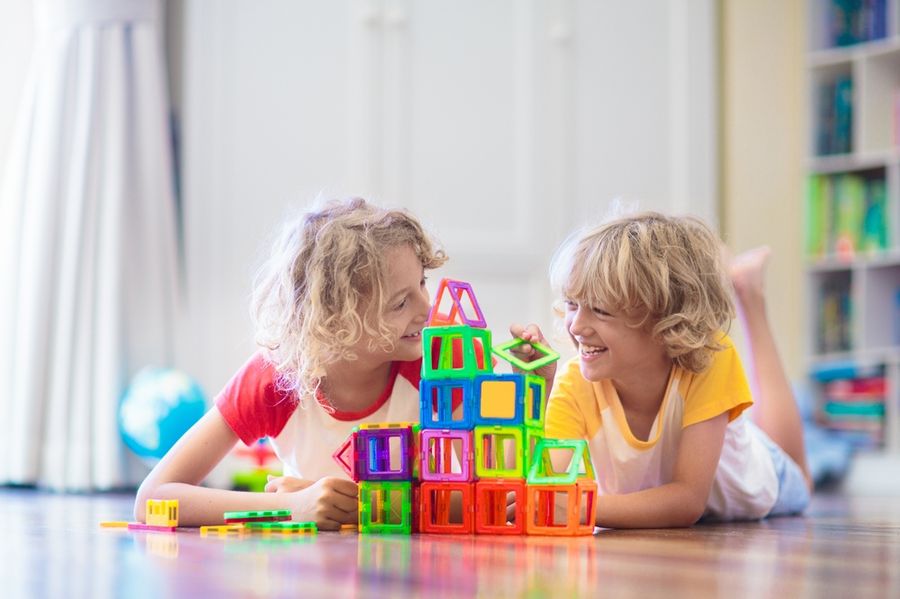
Magnets offer preschoolers an exciting introduction to scientific exploration because their effects can be observed without complicated equipment. A magnet can attract certain objects, move materials without touching them, and even push another magnet away. Surprising reactions encourage children to ask questions, make predictions, and investigate their surroundings. With age-appropriate materials and adult supervision, simple magnetic experiments can introduce foundational science concepts while helping young learners develop observation, classification, and problem-solving skills.
Discover Which Materials Magnets Attract
A magnetic discovery tray is an easy way to introduce preschoolers to attraction. Gather a large, child-safe magnetic wand and several oversized objects made from different materials. Suitable examples include a wooden block, plastic cup, cardboard tube, steel baking tray, and aluminum container. Before testing each object, ask children to predict whether the magnet will attract it.
Let children test their predictions individually, placing objects into two groups according to the results. This exploration of magnetic properties helps young learners recognize that magnets attract certain materials but not others. Explain that iron and many types of steel respond to magnets, while materials such as wood and plastic generally do not.
Afterward, invite children to investigate objects around the classroom. They might discover that a steel cabinet attracts the magnet while a wooden shelf does not. Encourage them to describe patterns rather than memorize a list of magnetic materials.
Go Magnet Fishing With Everyday Objects
Magnet fishing transforms material testing into a playful investigation. Place several large, age-appropriate objects inside a shallow plastic tray. Include some items that attract magnets and others that do not. Give children a securely enclosed magnetic wand and challenge them to retrieve the magnetic objects without using their hands.
The magnet fishing activity introduces a similar investigation using household materials. For preschool classrooms, choose oversized objects instead of loose paper clips, nuts, bolts, or other small pieces. Children can predict which objects their magnetic wand will retrieve before attempting the challenge.
Extend the activity by asking children to count their successful catches and identify what the objects have in common. Educators can also introduce descriptive vocabulary such as attract, magnetic, and nonmagnetic.
Move Objects Without Touching Them
One of magnetism's most fascinating properties is its ability to exert force without direct contact. To demonstrate this, place a large steel-backed object on a thin piece of cardboard. An adult can hold a child-safe magnet underneath the cardboard and move it slowly, causing the object above to follow.
This experiment adapts the principle behind a magnetic maze activity, which demonstrates how magnetic force can act through paperboard. To avoid choking hazards, teachers can use a large, securely constructed object rather than loose metal pieces.
Once children understand the movement, draw a simple winding path on the cardboard. Challenge them to guide the object from the beginning to the end using only the magnet underneath.
Ask what happens when the cardboard is replaced with thicker material. This introduces an opportunity to explore how increasing the distance between a magnet and an object can affect the force they experience.
Explore How Magnets Push and Pull
Magnets can do more than attract metal objects. Two magnets can also attract or repel each other, depending on how their poles are positioned. Using a pair of large, securely enclosed educational magnets, adults can demonstrate how the magnets move together or resist approaching one another.
Begin by positioning the magnets on a tabletop and slowly moving one toward the other. Children can observe the movement and describe what happens. Reverse the orientation of one magnet and repeat the demonstration. Introduce the words attraction and repulsion to distinguish pulling together from pushing apart.
Children can then predict what will happen when the magnets approach from different directions. Keep the explanation simple: magnets have two poles, and their orientation determines whether they attract or repel one another. Adult handling may be preferable when magnets could snap together and pinch fingers.
Investigate Magnetism Through Different Materials
A useful follow-up experiment involves discovering whether magnetic force can act through other materials. Place a large magnetic object on one side of a thin cardboard sheet and a child-safe magnet on the opposite side. Ask children to predict whether the magnet will still attract the object.
Repeat the investigation using a sheet of paper, thin fabric, and different cardboard thicknesses. Encourage children to describe which arrangements allow movement and whether increasing the separation changes the result.
Children can record their findings through simple drawings showing successful and unsuccessful tests. The emphasis should remain on observation rather than expecting preschoolers to understand magnetic fields. This activity also introduces the idea of changing one condition at a time while keeping other parts of an experiment consistent.
Keep Magnetic Exploration Safe and Age-Appropriate
Magnet activities require careful material selection. Small, powerful magnets can cause serious internal injuries if swallowed, particularly when multiple magnets attract one another inside the body. The safety guidance for magnetic products explains why these items must be kept away from children.
Use only large, intact magnetic teaching tools designed for the children's age group. Avoid loose magnetic balls, detachable magnets, and small metal objects that could be swallowed. Inspect materials before each activity, supervise all experiments, and store equipment securely afterward. If magnet ingestion is suspected, seek immediate medical attention rather than waiting for symptoms.
Turning Magnetic Discoveries Into Early Science Learning
Magnets give preschoolers opportunities to investigate an invisible force through visible results. Sorting materials introduces classification, magnetic fishing encourages prediction, and movement experiments reveal how objects can influence one another without direct contact.
The most meaningful learning occurs when children can test their own ideas, describe their observations, and repeat experiments with small changes. Parents and educators can encourage curiosity by asking what children think will happen next and inviting them to explain surprising results. These simple investigations can help establish foundational habits of scientific inquiry while making early science education enjoyable and accessible.