

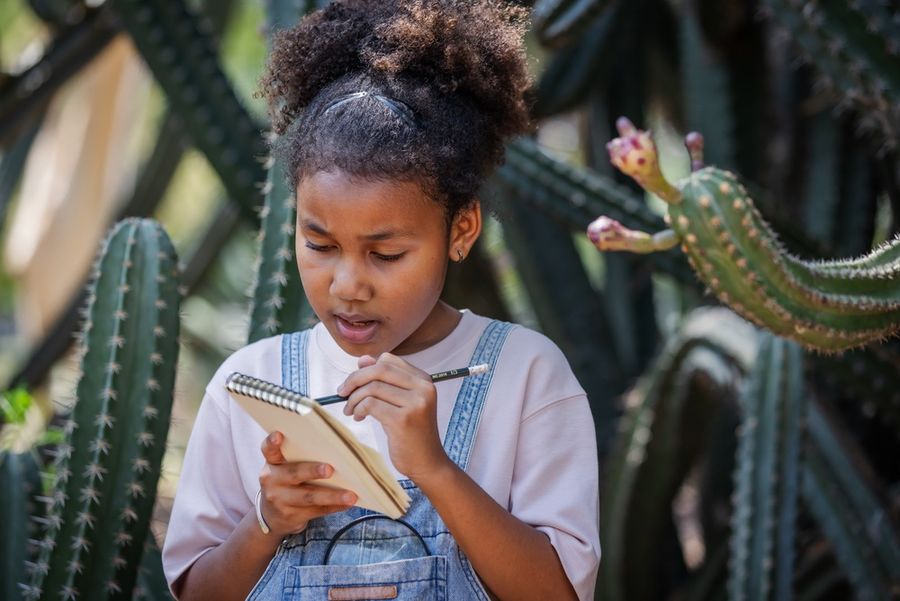
Young children are naturally curious about the world around them, but they don't always notice the small details that make nature so interesting. A nature journal encourages preschoolers to slow down, examine their surroundings, and record what they discover through drawings, symbols, and simple descriptions. Whether exploring a backyard, neighborhood park, or school garden, children can use nature journals to develop observation skills, recognize environmental changes, and begin asking thoughtful questions about the natural world.
Start With a Simple Nature Journal
Creating a nature journal requires few materials. A small notebook, crayons, colored pencils, and a clipboard are enough to begin. Preschoolers don't need to write complete sentences or produce detailed illustrations. Their journals might contain colorful scribbles, recognizable drawings, or short descriptions recorded by an adult.
Begin by visiting a familiar outdoor space and inviting children to choose something interesting to observe. It might be a flower, a tree, or an insect moving across the ground. The nature journaling activity offers an approachable method using drawings, words, and simple observations. Encourage children to record what catches their attention rather than requiring everyone to document the same object.
Practice Looking Closely at Natural Objects
Observational drawing encourages children to examine an object more carefully than they might during ordinary play. Select a large fallen leaf and invite children to study its color, outline, veins, and edges. Ask what they notice before giving them time to draw.
Afterward, examine the leaf again and encourage children to add something they initially overlooked. Perhaps they discover tiny spots, uneven edges, or a darker line running through the center. This activity demonstrates that observation can become more detailed with repeated attention.
Preschoolers can also compare two different leaves. Ask which is longer, whether their shapes are similar, and how their textures differ. These questions introduce comparison skills without turning the activity into a formal classification lesson.
Use Listening Activities to Expand Observation
Nature journaling doesn't have to focus exclusively on what children see. Listening can reveal aspects of an environment that might otherwise go unnoticed. Find a comfortable outdoor location, invite children to sit quietly, and ask them to listen for sounds nearby and farther away.
After a short period, encourage children to describe what they heard. They might mention birds, rustling leaves, footsteps, or passing vehicles. Adults can record these descriptions in the journal while children draw symbols representing the sounds.
This activity can follow the bird-sit observation method, which introduces young children to focused listening and recording outdoor experiences. Repeat the exercise on another day and ask whether the sounds have changed.
Return to the Same Location to Notice Changes
Revisiting a familiar outdoor location helps children discover that natural environments are constantly changing. Choose a particular tree, garden bed, or section of a playground and return regularly. Each visit provides an opportunity to create a new journal entry.
Children might notice emerging leaves, fallen branches, changing flower colors, or different insects. Invite them to compare their newest drawings with earlier observations. Ask which features stayed the same and which changed.
The garden journaling activity encourages children to document observations through pictures, spoken descriptions, and writing suited to their developmental abilities. Adults can help preschoolers label each entry with the date or weather conditions, creating a record of gradual environmental changes.
Introduce Questions and Simple Predictions
Nature journals become particularly useful when children begin asking questions about their observations. After examining an object, encourage them to share something they wonder about. A child might ask why certain leaves have holes or why birds gather around one tree.
Write their questions beneath the corresponding drawings. Rather than immediately supplying an explanation, ask what they think might be happening. Children can then investigate through additional observation, an age-appropriate book, or a guided discussion.
For example, preschoolers observing a puddle after rainfall might predict whether it will remain the same size the following day. Recording the prediction and revisiting the puddle introduces the connection between observation and scientific investigation without requiring complicated experiments.
Adapt Journaling to Different Developmental Abilities
Not every preschooler will feel comfortable drawing or explaining observations in the same way. Some children prefer making quick marks, while others enjoy describing every detail verbally. Adults can transcribe children's comments, provide larger drawing tools, or offer a limited choice of objects to observe.
Journaling activities can also accommodate children with different physical or sensory needs. An adult might bring natural materials to an accessible table or provide a comfortable place to sit. The important goal is meaningful observation, not producing identical journal pages.
Keep sessions manageable and allow children to stop when their interest fades. Encourage curiosity without correcting every drawing or expecting scientifically precise descriptions. Journals should reflect children's developing understanding of their surroundings.
Help Children Become More Attentive Nature Explorers
Nature journals give young children a practical way to develop observation skills through drawing, listening, comparing, and asking questions. Familiar outdoor spaces become places for discovery when children are encouraged to notice small details and record their experiences.
Parents and educators can begin with occasional short sessions before establishing a more regular routine. Reviewing earlier entries allows children to recognize changes in their surroundings and appreciate their own developing abilities. Over time, nature journaling can help transform ordinary outdoor experiences into opportunities for curiosity, thoughtful observation, and early scientific learning.